
United Nations high level panel discusses the importance of the Venice Principles for Ombudsman institutions
Published May 19, 2026
United Nations high level panel discusses the importance of the Venice Principles for Ombudsman institutions
Published May 19, 2026
A high-level panel convened at the United Nations Headquarters in New York discussed the importance of complying with the Venice Principles to strengthen the independence and autonomy of Ombudsman institutions and create an enabling environment for them to effectively perform their mandate nationally and internationally.
The panel was organised in accordance with United Nations General Assembly Resolution 79/177 and focused on the role of Ombudsman institutions in promoting human rights, good governance, accountability, and the rule of law. Discussions also addressed the growing challenges faced by Ombudsman institutions worldwide, including political pressure, financial constraints, digital transformation, artificial intelligence, and global crises.
The Venice Principles, adopted by the Venice Commission in 2019 and subsequently acknowledged by the United Nations General Assembly, constitute the first dedicated international standards specifically focused on the protection and promotion of Ombudsman institutions. The Principles establish standards on independence, appointment procedures, mandates, operational autonomy, financial stability, and protection from interference.
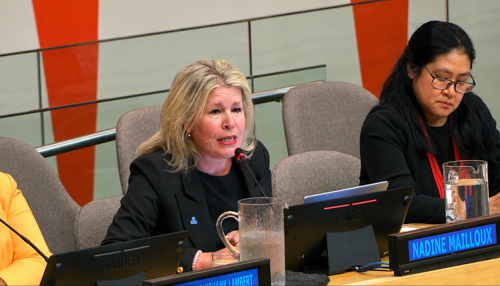
In her address, the President of the International Ombudsman Institute (IOI), Nadine Mailloux, highlighted the importance of safeguarding the independence of Ombudsman institutions and addressed challenges that may hinder the implementation of the Venice Principles. She also referred to emerging challenges, including artificial intelligence and global crises, and discussed how the Venice Principles can help institutions preserve their autonomy and effectiveness in increasingly complex environments.
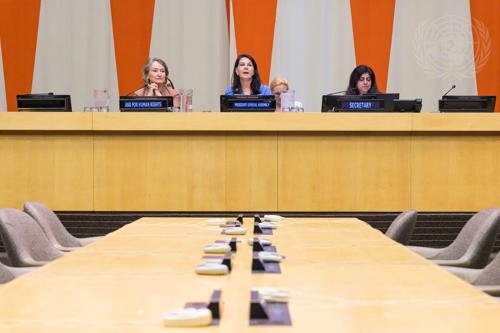
Addressing the panel, the President of the 80th Session of the United Nations General Assembly, H.E. Annalena Baerbock, stressed that Ombudsman institutions play a vital role in democracy, human rights, and the rule of law by providing accessible and impartial mechanisms through which people can challenge unfairness, maladministration, and abuse of authority.
She underlined that Ombudsman institutions can only function credibly if their independence is protected both in law and in practice. She referred to the need for safeguards against political pressure, intimidation, financial coercion, and undue interference, as well as the importance of transparent appointment procedures, adequate resources, and operational autonomy.
The President also highlighted that Ombudsman institutions today face increasingly difficult environments marked by political pressure, online abuse, threats, shrinking civic space, and the growing impact of digital governance and artificial intelligence on public administration and human rights. She stressed that upholding the Venice Principles is essential to ensuring that Ombudsman institutions continue to serve the public with integrity, impartiality, and courage.
The Office of the Ombudsman in Malta forms part of the International Ombudsman Institute, the global organisation bringing together independent Ombudsman institutions from around the world. The Parliamentary Ombudsman, Judge Joseph Zammit McKeon, is an elected member of the IOI World Board and Vice President of the IOI European Region.
The annual meeting of the IOI World Board was recently held in Willemstad, Curaçao, where representatives from Ombudsman institutions worldwide discussed governance, international cooperation, ethical standards, training initiatives, artificial intelligence, and the strengthening of Ombudsman institutions globally.
