
The Ombudsperson of Kosovo: An institution worthy of consistent international recognition and support
Published December 15, 2025
The Ombudsperson of Kosovo: An institution worthy of consistent international recognition and support
Published December 15, 2025
by the Parliamentary Ombudsman, Judge Joseph Zammit McKeon
Introduction
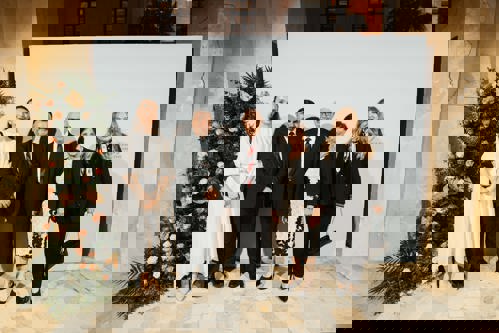
I have visited twice the Ombudsperson Institution of Kosovo (“OIK”). The first occasion was in May 2023 in my first overseas visit as Parliamentary Ombudsman of Malta and as Secretary-General and Treasurer of the Association of Mediterranean Ombudsmen (“AOM”). The second occasion was in December 2025 as Vice-President of the Board of the European Region of the International Ombudsman Institute (“IOI”) and as Parliamentary Ombudsman of Malta.
A constitutional institution
The OIK is a constitutionally-established independent oversight body that monitors and protects the rights of persons vis-a-vis public authorities. It serves as a public advocate for human rights, good governance, non-discrimination and has the status of an equality body. The OIK investigates complaints, but has also the power to commence ex officio investigations whenever it suspects rights violations. The Institution is the National Preventive Mechanism of the country under the UN Torture-Prevention Protocol, reports annually to the Parliament of Kosovo and may refer matters to the Constitutional Court.
Mandate
The mandate of the OIK is established in Art 132-135 of the Constitution of Kosovo and was further extended by the Ombudsperson Act 2015. By virtue of the Constitution, the OIK monitors, defends and protects the rights and freedoms of persons from unlawful or improper acts or failures to act of public authorities. The OIK is governed by Venice Principles and the Paris Principles and enjoys organisational, administrative and financial independence.
Structure
The Office has one Ombudsperson and five Deputy Ombudspersons. At least one of the Deputy Ombudspersons has to come from the minority communities in order to reflect the function of the Office as protector of all citizens, including minorities.
I have had the honour of meeting and speaking to all these leading personalities (and their dedicated staff). They are all remarkable people with a positive and clear vision to carry out their mandate fairly and fearlessly.
Human rights and good governance
The OIK is a vital structure for the promotion and protection of human rights. As in the case of other ombuds and human rights bodies, the services which it provides are free of charge. In cases of proven violations, the OIK has the right to demand information from authorities and insist on corrective action. It also monitors government policies to ensure compliance with the laws of the country. The Institution can also appear as amicus curiae in court proceedings.
The Ombudsperson actively engages the media and public advocacy to make his work and that of the Office known to as wide an audience as possible in order to raise the level of public awareness. This outreach to the public helps inform people about their rights and bring about systematic change where there is abuse. The OIK also interacts with human-rights NGOs as part of its mandate.
Because Kosovo is historically, socially and culturally multi-ethnic, the Ombudsperson plays a particularly crucial role in the promotion and protection of minority rights and equality. The Institution has jurisdiction on the application of the Law on Gender Equality and the Law on Protection from Discrimination. It investigates hate crimes, language-rights issues, and discrimination against women, Roma, Serbs and other communities, serving as a first point of contact for victims of discrimination. In doing so the OIK helps build public trust across communities.
Challenges and limitations
Despite its strong legal mandate, the Ombudsperson Institution faces serious constraints. In an interview of May 2025, the Ombudsperson Naim Qelaj remarked that political interference and declining respect for fundamental rights were threatening democratic progress. He lamented negative rhetoric that had brought about a hostile working environment for oversight bodies. He noted that Parliament had voted against the annual report of the Institution to the extent that the matter was brought to the attention of the Board of the European Region of the International Ombudsman Institute. The IOI acted in support of the OIK.
International support
Well aware of these and other challenges, international bodies have been key to establishing and strengthening the Institution. The OSCE, the EU and the Council of Europe, have tangibly and fruitfully manifested their support in the operations of OIK.
As far as the EU is concerned, the EU Kosovo reports consistently call for Kosovo institutions to implement OIK recommendations and to involve the Ombudsperson in strategy development. The EU Commission has urged that the Inter-Ministerial Group on Human Rights to include the Ombudsperson as a key advisor.
That action being acknowledged and reaffirmed, I am of the view that more can be done by EU Networks to open more for the OIK to participate in its activities and initiatives. The Ombusperson, his Deputies and staff have proven credentials to bring added value to the work of the networks.
Far reaching benefits
Supporting the Ombudsperson Institution has far-reaching benefits for the democratic strengthening efforts of the country and European integration.
The OSCE has highlighted the fact that the independent institutions of Kosovo including the Ombudsperson are central to its democracy. Weakening the Ombudsperson would leave people with a limited access to non-judicial remedies.
The mandate of the Ombudsperson expressly extends protection to vulnerable groups and minority communities. In a nation that is still in the healing process of ethnic divisions, this role is critical.
I have witnessed the effects of the human anguish and tragedy caused by the war of the 90s and its aftermath when I visted Prizren in 2023, and Precaz, Peja and Gjavoka in 2025. I say: “never but never again”.
The international backing of the OIK sends a clear message to minorities in Kosovo that their concerns will be heard. When Serb activists alleged harassment by the Police, the Ombudsperson convened civil society and police oversight bodies to investigate, illustrating how his office could channel minority grievances into formal processes for the protection of minorities.
The OIK is an important part of Kosovo’s European integration framework. Strong ombuds institutions are essential for all member states of the Council of Europe and of the EU. The bid by Kosovo to become a member of the Council of Europe has faltered partly because of perceived democratic deficits. The Ombudsperson has made the point that full membership of the Council of Europe would signal that Kosovo has achieved democratic standards comparable to other European nations. On my part I add that by Kosovo becoming a full member of the Council of Europe would give all persons in Kosovo the right to seek redress before the European Court of Human Rights as far as the application of the European Convention for the Protection of Human Rights and Fundamental Freedoms is concerned.
The OIK deserves full support, including financial support, capacity building initiatives, legal and structural assistance, further direct inclusion and involvement in international ombuds and human-rights strategy bodies, protection of its independence, community outreach. By fully investing in the Ombudsperson Institution, the international community can help Kosovo strengthen further and effectively the rule of law. A stronger OIK will in a better position to hold public authorities to account and protect vulnerable groups.
To conclude. The Ombudsperson Institution of Kosovo is widely recognized by international bodies and by minority communities themselves as a genuine and credible voice. It maintains open channels with minority groups, and minority leaders publicly commend its interventions. The Institution has proved itself as a trusted defender of all and therefore deserves consistent international recognition and support.
